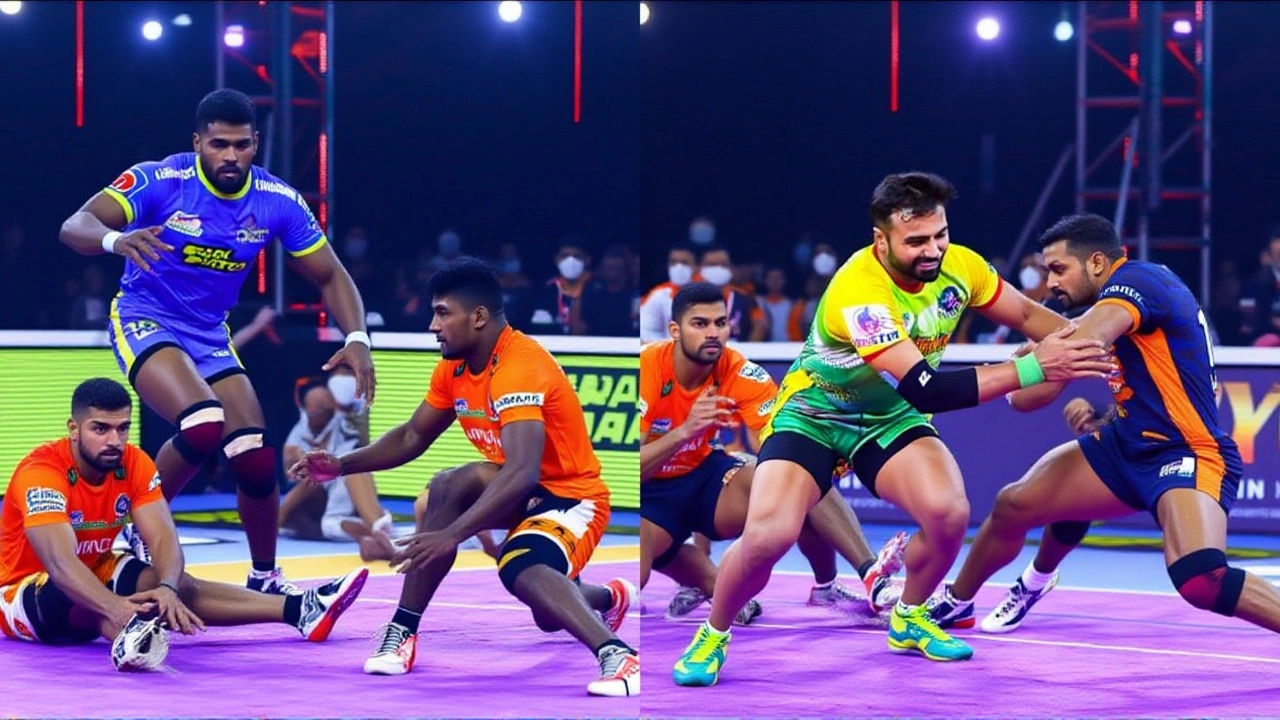
It came down to the last raid — a single point, one breath, one heartbeat. Dabang Delhi K.C. clawed back from the brink, defeating Puneri Paltan 31-30 in a nail-biting final that had fans in Delhi on their feet and millions more glued to their screens. The Pro Kabaddi League 2025 (2025-08-29 to 2025-10-31) ended not with a roar, but with silence — the kind that follows a perfectly executed tackle, the kind that makes you forget to breathe. This was Dabang Delhi’s second title in franchise history, and it came after a season defined by tension, strategy, and a league-wide overhaul of its scoring rules.
The Final That Defied Logic
The final at Thyagaraj Indoor Stadium wasn’t just a match — it was a masterclass in pressure management. Puneri Paltan, who’d dominated the league stage with a +88 score difference, looked poised to claim their first title. Dabang Delhi, despite finishing second on tiebreakers, had been the more consistent playoff team. The score was locked at 30-30 with just 12 seconds left. Delhi’s captain, Pardeep Narwal, known for his uncanny ability to turn chaos into calm, slipped past three defenders in a single raid. The crowd erupted. The scoreboard blinked: 31-30. Game over.League Stage: A Battle of Titans
The road to the final was anything but straightforward. Both Dabang Delhi K.C. and Puneri Paltan finished the 18-game league stage with identical records: 13 wins, 5 losses, 26 points. Under the new 2025 rules — where wins earn 2 points and losses 0 — tiebreakers became everything. Puneri Paltan’s +88 point difference edged out Dabang Delhi’s +38, giving them top seed. But here’s the twist: the playoffs don’t care about regular season seeding. They care about who’s hot when it matters. The Bengaluru Bulls, with a blistering +97 difference, finished third — yet they were eliminated in the Qualifiers. The Telugu Titans, fourth, lost their Qualifier too. Meanwhile, the defending champions, Haryana Steelers, who’d stunned everyone last season, limped into fifth with 20 points and a +40 difference. Their title defense collapsed under the weight of inconsistent raids and poor defensive rotations.The New Rules, The New Game
This season, PKL scrapped its complex bonus-point system. No more bonus points for 3+ raid points or 3+ tackles. Just win or lose. Two points. Zero points. Simple. But the league added a new layer: if teams are tied on points, the tiebreaker is now head-to-head result first, then score difference. That’s why Puneri Paltan finished first — they beat Dabang Delhi 38-38 in their direct clash, but held the edge on overall point differential. It was a rule change designed to reward consistency, not just big wins. The impact was immediate. Teams stopped playing for high-scoring raids and focused on defense. The average points per match dropped by 11% compared to last season. It was kabaddi turned chess — every raid a calculated risk, every tackle a statement.
Who Made the Cut — And Who Didn’t
The playoff structure was brutal. Only the top four — Puneri Paltan, Dabang Delhi, Bengaluru Bulls, Telugu Titans — entered the Qualifiers directly. Teams ranked 5–8 — Haryana Steelers, U Mumba, Patna Pirates, Jaipur Pink Panthers — had to fight through the Play-ins. U Mumba, despite having the same 20 points as Haryana, lost out due to a +8 difference versus +40. Jaipur Pink Panthers, with a -48 difference, were the most vulnerable. They didn’t just lose — they collapsed, conceding 57 to Puneri Paltan on October 15. The bottom three — Tamil Thalaivas, Gujarat Giants, and Bengal Warriorz — all finished with 12 points. But Bengal Warriorz, with a -104 difference, were the league’s most porous defense. They lost to Dabang Delhi by a single point in Chennai on October 9 — a match that went to sudden death. That game, more than any other, signaled the rise of Delhi’s mental toughness.What’s Next? The Women’s World Cup Looms
While the men’s league ended on October 31, the kabaddi world didn’t stop. The Women’s Kabaddi World Cup 2025 is set for November 24 in Dhaka, with India and Chinese Taipei facing off after both went undefeated. India’s team, led by captain Pooja Gehlot, didn’t just win — they dismantled opponents, averaging 34 points per match. Chinese Taipei, meanwhile, outscored their rivals by an average of 22 points. The final will be more than a title — it’s a statement. Kabaddi isn’t just a men’s game anymore.
Legacy of PKL 2025
Dabang Delhi’s win wasn’t just about Pardeep Narwal’s final raid. It was about resilience. They lost three games in the league stage — each by less than five points. They came back from behind in four playoff matches. Their coach, Vijay Kumar, didn’t change his system — he tightened it. And in a league that’s grown from eight to 12 teams, that kind of consistency is rare. The league’s new rules are here to stay. Fans are calling it the “Pure Kabaddi” era. No gimmicks. Just skill. Just pressure. Just heart.Frequently Asked Questions
How did Dabang Delhi K.C. win the title despite finishing second in the league?
Despite finishing second on tiebreakers due to Puneri Paltan’s superior +88 score difference, Dabang Delhi K.C. had a stronger playoff run, winning all three of their knockout matches. The league’s format prioritizes playoff performance over regular-season ranking, and Delhi’s ability to win close, high-pressure games — including a 37-36 sudden-death win over Bengal Warriorz — proved decisive.
What changed in the PKL 2025 scoring system?
The 2025 season eliminated bonus points for raids or tackles. Teams now earn exactly 2 points for a win and 0 for a loss. The tiebreaker order was also flipped: head-to-head result now comes before score difference, making direct matchups more critical. This shift favored disciplined, defensive teams over high-scoring but inconsistent ones.
Why did Haryana Steelers fail to defend their title?
Haryana Steelers, last year’s surprise champions, struggled with inconsistent raiding and defensive lapses in 2025. Their key raider, Rishank Devadiga, was often contained by elite defenders. They lost four games by five points or less, and their playoff run ended in the Qualifiers after a 32-35 loss to Bengaluru Bulls. The team’s reliance on a few stars backfired when those players were neutralized.
Which teams showed the most improvement this season?
The Telugu Titans improved dramatically, jumping from 9th to 4th place. Their new defensive coordinator, former national player Arjun Deshwal, implemented a zone defense that reduced opponents’ raid points by 22%. Meanwhile, UP Yoddhas, despite finishing ninth, showed flashes of brilliance — their raider Maninder Singh had the league’s highest raid points per match at 7.4.
What’s the significance of the Women’s Kabaddi World Cup final?
The India vs. Chinese Taipei final on November 24, 2025, marks the first time in history that two undefeated teams meet in the Women’s Kabaddi World Cup final. India’s dominance in Group A, with no team scoring more than 20 against them, signals a new era of women’s kabaddi. Chinese Taipei’s 10-point average win margin suggests they’re ready to challenge India’s long-standing supremacy.
Will the PKL expand further in 2026?
Mashal Sports has confirmed plans to add two new franchises in 2026 — one each from Odisha and Kerala — bringing the total to 14 teams. The league is also testing a “franchise draft” system to improve competitive balance. With viewership up 18% this season and sponsorship deals hitting ₹1,200 crore, expansion is inevitable — but the focus remains on quality over quantity.





Write a comment